A kit is a box of parts, not a finished flock
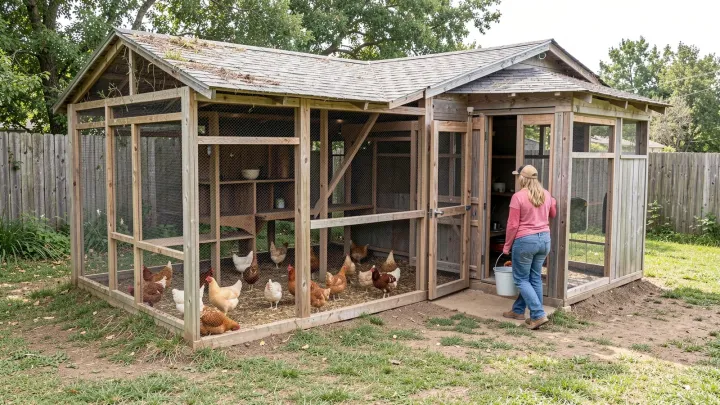
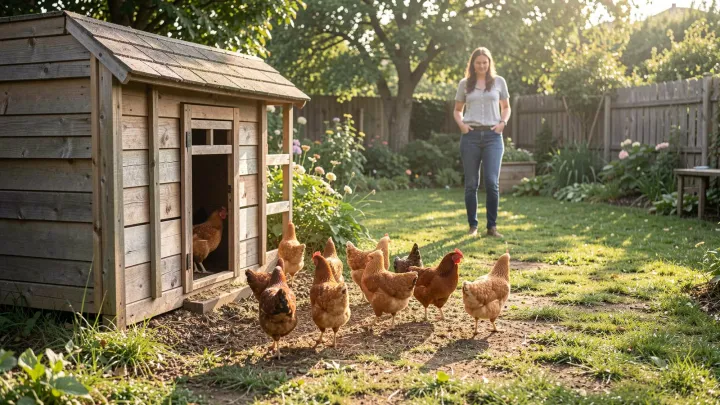
A chicken coop kit can be a good way to get a house and, sometimes, a run in one delivery. It can also be a crate of thin panels, vague hardware, and a capacity claim that would not survive a tape measure. Buy the kit the way you would buy any other structure: by space, materials, predator resistance, and whether you can actually assemble and clean it.
This is a buying guide, not a veterinary article and not a review of named brands. Local rules still come first. Confirm that you may keep chickens, how many, and whether the structure needs a permit, before you order a kit that is hard to return.
For space and interior layout, use university extension figures rather than the number printed on the carton. The University of Delaware Cooperative Extension recommends at least 2 to 3 square feet per bird inside the coop and 8 to 10 square feet per bird in the outdoor run, with ventilation that is not a draft on the roost, predator-proof latches and mesh, and about one nest per 3 to 4 hens. See Delaware Extension’s housing fact sheet. The University of Maryland Extension publishes a table by bird type and further notes on vents, ½-inch hardware cloth, nest and roost height, and site drainage, in Housing Requirements.
If the kit listing says “fits 6 to 8 hens” and the interior floor is the size of a coffee table, believe the floor.
What should be in the kit, and what usually is not
Read the parts list as if you will have to finish the job on a Saturday with one other person.
Usually in a complete kit. Wall and roof panels or precut boards; floor or floor frame; door and pop door; some form of nesting box; a roost; hardware for assembly; and, if advertised as a coop-and-run set, the run frames and mesh. Instructions should include a finished dimension, a count of birds the maker claims, and a hardware list.
Often missing, even when you need it. Ground anchors; an apron or buried mesh against digging; a real latch upgrade; paint, stain, or roofing felt; a ramp that matches the pop-door height; and hardware cloth in place of decorative chicken wire. Some kits also arrive without a floor, which is a design choice, not a defect, but only if you have a dry, predator-proof plan for the ground.
The run is a separate question. A “coop kit” may be house-only. A “coop and run kit” still needs enough run area for the flock you want. Do not let a short, uncovered run count as the 8 to 10 square feet per bird Delaware describes unless the numbers truly add up.
Ask for the assembled exterior and interior measurements, not only a lifestyle photo. Then calculate:
- Interior floor area ÷ birds = square feet per bird inside
- Run floor area ÷ birds = square feet per bird outside
- Number of nest boxes versus a 3-to-5 hen ratio (Delaware uses 3–4; Maryland uses 4–5)
- Whether the roost is higher than the nests, which Maryland recommends so birds do not sleep in the laying boxes
If a seller will not give you interior measurements, you are buying a photograph.
Materials, weather, and assembly effort
Wood kits. Common and repairable. Look at the thickness of the panels, the quality of the joints, and whether the wood is already treated or will need a finish suitable for an animal house. Thin plywood that flexes in the listing photos will flex more in a wet year. Check whether the roof has a real overhang, so rain does not run into the pop door.
Plastic or resin kits. Often easier to clean and sometimes easier to assemble. Check ventilation carefully; a tight plastic box can hold moisture. Also check how you will repair a cracked panel in five years, and whether the kit is rated for your wind and snow load. If the maker is silent on weather, assume you must add anchoring yourself.
Metal kits. Durable when coatings are sound and edges are safe. Watch for sharp corners, rust points, and summer heat. Birds still need shade and airflow, not only a shiny roof.
Assembly is part of the price. A kit that needs two people, a drill, a level, and a full day is not “some assembly” in the casual sense. Read the steps. If the instructions are a single exploded drawing with no hardware sizes, budget extra time and a trip for missing bolts. Build on a level pad. A kit wracked out of square will not close well, and a door that does not latch is not a coop.
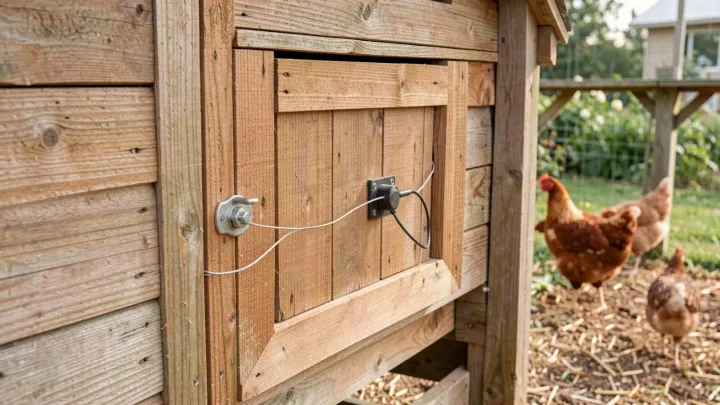
After assembly, do a predator audit before any bird moves in. Press on the mesh. Try the latches with gloves on. Look for gaps at the floor, the eaves, and the vents. Maryland’s ½-inch hardware cloth standard is a good test to apply to openings; many kits ship with wider mesh and need an upgrade. Add a two-step latch if the kit came with a simple hook.
A buyer’s table for chicken coop kits
| Check this |
What you want to see |
A reason not to order |
| Claimed capacity |
Interior square feet that meet extension minimums for your bird count and type |
A “8-hen” label on a house that only meets 2–3 sq ft for three or four birds |
| Run included or not |
Either enough run area in the kit, or a plan and budget for a separate pen |
A house-only kit sold as a complete backyard system |
| Mesh and latches |
Hardware cloth on openings, covered run or a plan for one, latches that need more than a nudge |
Chicken wire only, open top, hook latch as the sole closure |
| Ventilation |
Adjustable vents, placed so air can move without blowing the roost |
No vents, or vents that also serve as an animal entrance |
| Cleaning |
A door you can walk or reach through, a floor you can scrape, nests you can empty |
A sealed decorative house with no real access |
| Site and floor |
A level, drained pad; a floor or a predator-proof ground plan |
A kit that must sit in a low, wet corner “as shown in the photo” |
| Assembly |
A clear parts list, finished dimensions, two-person plan if needed |
Missing hardware list, no interior measurements |
| Weather and anchors |
Anchors or a written way to fix the kit down in wind |
A tall, light structure with no anchoring plan |
| Local rules |
The size and bird count are allowed where you live |
A kit you cannot legally keep, or cannot return |
Kits sold as “starter coops” can still be worthwhile for a very small flock if you treat the printed capacity as advertising and size the flock to the floor. They are a poor buy if you plan to add birds in six months and have no way to expand the run.
Used kits and homemade copies of a kit plan are fine if you inspect the same points. Rot at a base panel, rusted staples, and tired mesh are not a bargain.
If a bird later becomes unwell, that is a veterinary matter, not a kit-settings matter. This article does not offer treatment advice.
Questions to settle before you pay for a coop kit
How many chickens will a kit really hold?
Measure the interior floor and divide by the extension space figures for your type of bird, then round down. Ignore a carton number that is higher than that result. If you also need a run, repeat the calculation for the run.
Is a cheaper kit fine if I upgrade the mesh later?
Sometimes, if the frame is stout enough to take hardware cloth and better latches, and if you will actually do the upgrade before the birds arrive. A weak frame with good intentions is still a weak frame.
Do I need a kit with a floor?
A floor helps keep bedding dry and can block digging predators if it is solid and tight. A floorless kit can work on well-drained ground with a buried mesh apron and a dry bedding plan. Choose on purpose; do not discover the missing floor at assembly.
Can I assemble a chicken coop kit by myself?
Some small kits, yes, if you are comfortable with a drill and a level. Many house-and-run kits are two-person jobs, especially at the roof and the run panels. Read the instructions, and do not start late in the day on an uneven lawn.