"Large" only means something once you name the flock
A large chicken coop, or a very large chicken coop, is not a size on a catalog sticker. It is a structure that still gives each bird enough indoor and outdoor room after you count the birds you actually have, and the birds you might add. University extension services do not all use the same minimum, and none of those minima is a license to ignore a local ordinance. This article compares official figures, then turns them into a buyer's table. It is not a veterinary guide, and it will not invent a single "correct" square footage.
Penn State Extension's table of minimum space for poultry lists 1.5 square feet inside and 8 square feet in outside runs for laying hens, and 2 square feet inside and 10 square feet outside for large chickens. Oregon State Extension's backyard coop guidance recommends at least 3 square feet per bird if there is access to a run, and 8 to 10 square feet per bird if there is no outdoor access. A USDA Agricultural Research Service backyard Q&A has suggested targeting 3 to 4 square feet for each adult layer in a sample coop discussion. When official sources differ, give more space than the tightest number, and read the current pages: Penn State Extension, Small Scale Poultry Housing, OSU Extension, Backyard Chicken Coop Design, and the USDA ARS note on raising healthy backyard chickens.
A comparison table for large-coop decisions
| Question |
What to specify before you buy |
Official or practical check |
| How many birds, at what size? |
Adult count, including future additions; bantams and large fowl are not interchangeable |
Penn State lists different indoor and outdoor figures by type of bird |
| Indoor floor area |
Length times width, minus space you cannot use |
Compare your number with Penn State, OSU, and local rules; do not use the tightest figure as a target to beat |
| Outdoor run |
Whether it is included, covered, and actually usable in your climate |
Penn State outdoor figures; OSU also emphasizes a secure, covered run |
| Doors and aisles |
Whether a person can enter to clean, or must reach from outside |
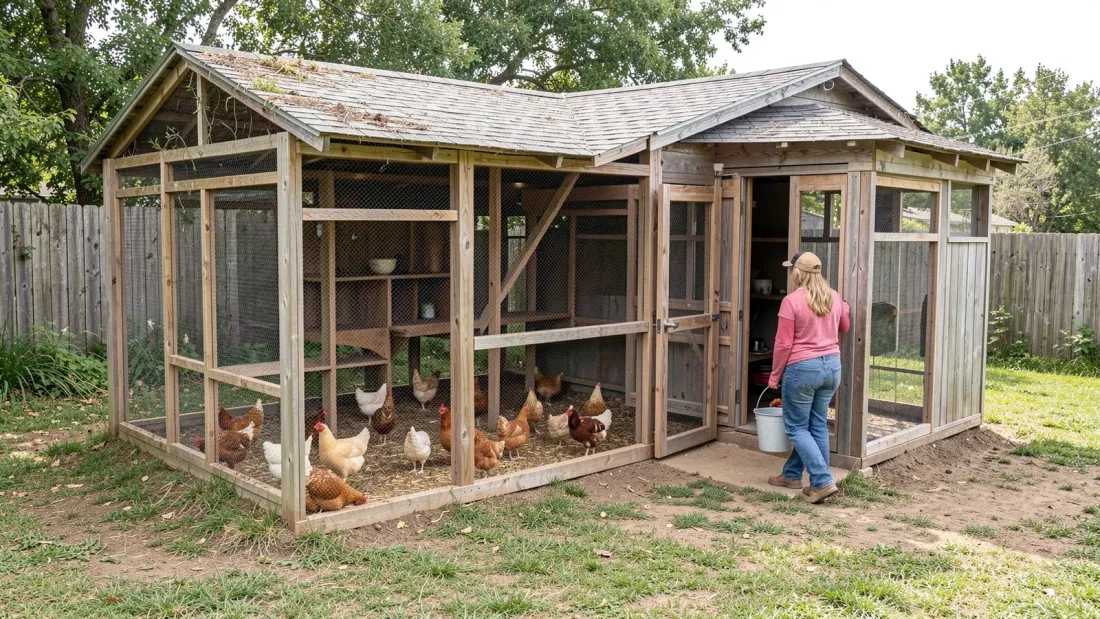
A "large" coop you cannot clean is not large in any useful sense |
| Roosts and nests |
Length of roost and number of boxes |
Penn State: 6 inches of roost per standard bird, nests at least 12 by 12 inches, two nests for the first four hens then one per four more; OSU: about one nest box per four birds, 12 by 12 by 12 inches |
| Ventilation without drafts |
Openings you can adjust, not over the roost |
Both extensions treat ventilation as essential; OSU notes most backyard coops can use passive vents, without drafts on the birds |
| Predation and digging |
Floor, skirt, and mesh |
OSU: 1-by-2-inch mesh, netting or wire over the run, fencing buried 6 inches to 1 foot |
| Local rules |
Setback, flock cap, and whether a "large" structure needs a permit |
Your city or county, not the seller |
A very large chicken coop that is long and low can still be cramped if the run is an afterthought, or if people cannot walk in to clean it.
A buyer's checklist for a large chicken coop
- You have a current bird count and a realistic maximum
- Indoor and run areas have been measured, not estimated from a photograph
- Official extension ranges have been read, and your local ordinance has been read
- You can enter, or otherwise clean, every corner
- Roosts, nests, feeders, and waterers can be placed using extension spacing as a starting point
- Ventilation exists and can be adjusted without blowing on the roost
- The run is covered and the perimeter is dug in, or you have a plan to do that work
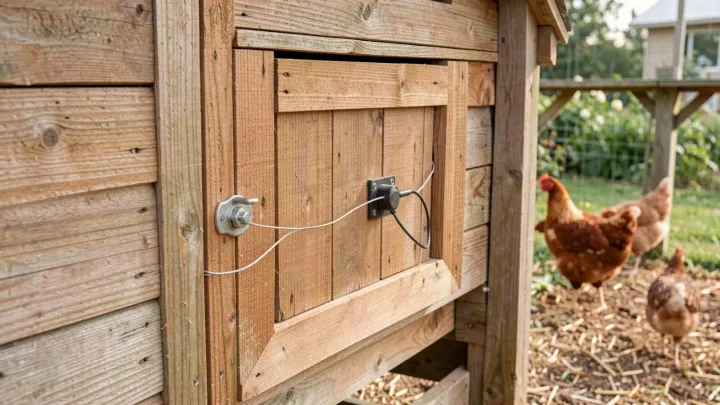
- Doors, ramps, and pop holes will work with any automatic door you might add later
- Delivery, a foundation or skids, and a path for a wheelbarrow have been thought about
- You will not add birds first and measure second
Penn State also recommends at least 3 inches of feeder space per bird, and placing the lip of feeders and waterers at the birds' back height. Those details belong in a large coop as much as in a small one.
What "large" does not fix
It does not fix a damp floor, a door you cannot lock, or a roof you cannot maintain. It does not replace daily attention. A bigger coop with poor ventilation can hold more stale air. Build or buy for cleaning and for dry footing, then for size.
If you are comparing kits, ignore the word large on the box until you have a floor plan in numbers. If you are building, draw the walkway first. Chickens need space. So does the person with the shovel.
Floor, foundation, and moving a large house later
A large coop on wet ground will undo good floor-area math. Penn State advises building on high, well-drained ground and facing openings to take sun and drying where that is practical. A skid or runner design can help you move a coop later; a large, poorly thought foundation can fix the house to a bad spot. If you think you might move it, say so before you buy, because a "large" kit may be a two-person object or a machine-lift object, not a weekend slide.
Inside, plan a floor you can scrape. A very large house with no walkway is a very large reach. That is a maintenance fact, not an aesthetic one.
Questions about large chicken coops
How big should a large chicken coop be for a flock of laying hens?
Start with your headcount, then compare official extension figures, which are not identical, and your local ordinance. Use the more generous end of the official ranges if you can, and add a run you will actually maintain. Do not treat 1.5 square feet as a comfortable family target just because it appears as a minimum in one table.
Do very large chicken coops need the same nest and roost math?
Yes, the per-bird logic still applies, and a larger flock needs the placements to be reachable for cleaning. Follow current extension nest and roost notes, and do not stack roosts so high that birds can be injured; Penn State advises not letting chickens perch more than 4 feet off the floor.
Can I keep a large coop without a run if the indoor area is big enough?
OSU's figures for birds without outdoor access are 8 to 10 square feet per bird, which is a different design from a coop-plus-run. A large indoor area still needs dry bedding, ventilation, and a way to clean it. Check local rules; some places require outdoor access.
Should I buy a larger coop than I need?
A modest surplus can be useful if you already know you may add a few birds and you can still keep the space dry and clean. A huge, empty, damp house is not automatically kinder. Match the structure to a flock you will actually manage.