A chicken coop mover is only useful if you can actually move the coop
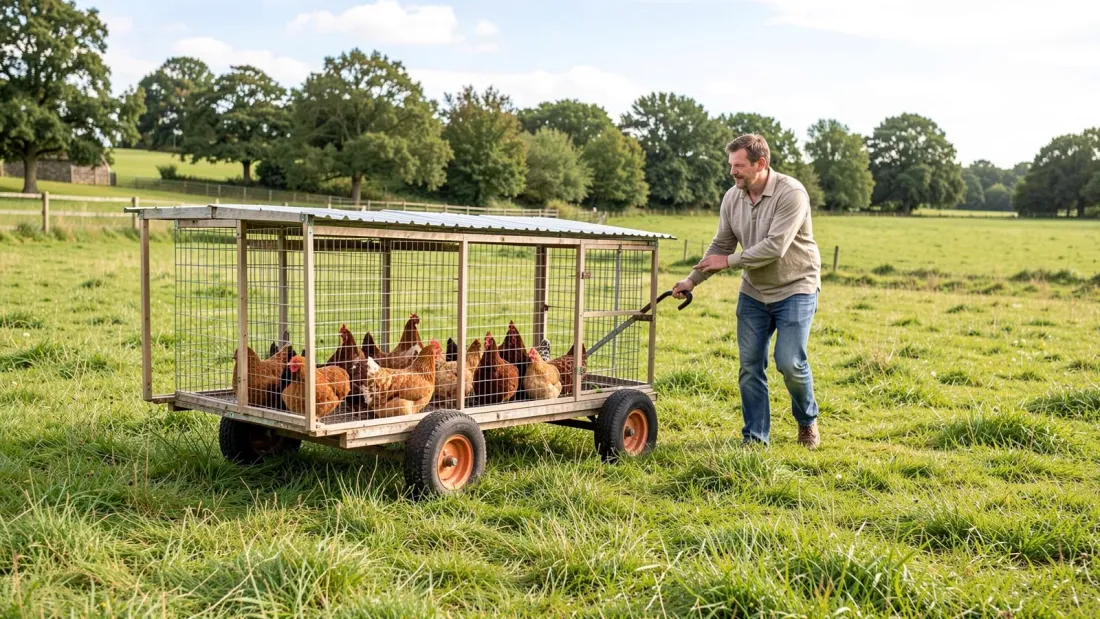
A chicken coop mover is a wheel kit, a skid, a tractor base, or a trolley system whose job is to let you shift a house or a run without destroying the house, the ground, or your back. How to choose one depends on the weight of the coop, the ground you have, and whether birds will be inside when you move it. This is a buyer's guide, not a test of brands, and not an invitation to tow a tall, top-heavy house at speed.
The housing the mover carries still has to be a decent house. Official space, ventilation, and predator notes remain in force: Penn State Extension, Small Scale Poultry Housing and OSU Extension, Backyard Chicken Coop Design. Oregon State also notes that mobile units still need the same indoor space per bird; moving the house is how you give birds fresh ground, not a way to shrink the floor.
Match the mover to the load and the ground
| Type |
Tends to suit |
What to inspect |
A poor match |
| Built-in wheels or a wheel kit |
A modest, rigid coop on relatively even ground |
Wheel rating, axle strength, and a way to chock or lift wheels off the ground when parked |
A floppy homemade coop that wracks when you pull |
| Skids or runners |
Moving occasionally, often with a tractor or a vehicle, on a prepared path |
Attachment points, skid length, and a route without stumps |
A daily move by hand on soft, rutted ground |
| Chicken tractor design (house and run as one mobile unit) |
Rotational grazing on a small scale, with frequent short moves |
Weight you can move, floor or under-mesh security, and shade |
A tractor so heavy that it is never moved, which defeats the design |
| Separate trolley or cart |
Moving parts, feed, or a small house a short way |
Rated load, wide tires, and a stable hitch or handle |
A garden trolley used as a trailer for a tall coop |
| Tow hitch on a coop |
Only if the coop is designed for it and the towing is slow and controlled |
The frame, not only a bolt in thin plywood |
Highway towing of a backyard house |
If you cannot state the approximate weight of the coop, do not guess with a cheap axle. Weigh, estimate from materials, or ask a builder, and then choose wheels or skids with a margin.
A how-to-choose checklist
- You know whether this is a weekly move, an occasional move, or a one-time relocation
- The coop is rigid enough to be moved without racking doors and nests out of true
- Ground conditions are honest: slope, mud, stumps, and gates
- The mover's rated load, if stated, exceeds the actual house, or you have a clear professional plan
- You can chock, brake, or settle the coop so it cannot roll when parked
- Birds, if present during a move, can be secured, and the move will be slow and short
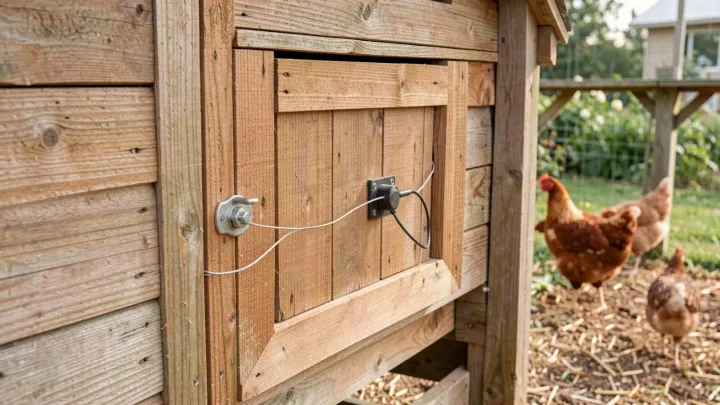
- Automatic doors, waterers, and electrical leads can be made safe before you move
- Predator security still works in the new position, including buried skirts or a floor, as the site requires
- You can still clean, collect eggs, and reach nests after the wheels or skids are in place
- Local rules still allow the new position
Do not move a coop with a loose door, a full waterer sloshing onto electrical parts, or a hitch you have not tested with an empty, short pull.
After you choose it, use it as a husbandry tool
The point of a mover is often fresh ground and a drier patch. It is not a way to ignore manure until a month has passed. Move often enough that the old patch can recover, and do not park a house back on a wet, bare hollow because it is close to the gate. Penn State's advice about well-drained sites still applies each time you set the coop down.
Check the structure after every move: doors close, roosts are still firm, wheels are chocked, and no new gap has opened at the skirting. A mover that slowly loosens a coop is more expensive than it appeared in the cart.
People, tools, and a path that exists in February
A mover is also a people plan. One person and a heavy house on a slope is a different job from two people on flat lawn. If a tractor is involved, only a person who can use it safely should use it, at walking pace, with no audience of children close to wheels and cables. If the path goes through a gate, measure the gate.
In wet seasons, wheels that were fine in August can rut a paddock you care about. Wide tires, more frequent shorter moves, or waiting a day can be kinder than a deep mark you then have to live with. Official advice about well-drained sites does not stop when the coop becomes mobile. Each new position is a new site.
Store chocks next to the coop, not in a shed at the other end of the property. The last step of a move is to stop the house moving. If that step is inconvenient, it will be skipped, and a house will roll farther than you meant, even on a mild slope.
Look at hoses and electrical leads every time. A mover that works is a mover you unhook, shift, set down, chock, and reconnect, in that kind of order, without rushing the birds.
If the only honest review of your week is that you will not move the house, do not buy a tractor design you will use as a static, undersized run. Buy a static coop with a proper run instead, and save the mover for a house you will actually shift.
Questions about choosing a chicken coop mover
Can I add wheels to a coop I already have?
Sometimes, if the frame can take the load and you can add a proper axle, not only screws into thin siding. If the house is already heavy and floppy, a wheel kit can make it worse. A builder's look may be cheaper than a failed weekend.
Should birds be inside when I move the coop?
Only if the house is designed for a slow, short move, the birds are secure, and you can do the job calmly. If in doubt, move them first, then the house. Do not bounce a tall coop down a rut with a full roost.
Is a chicken tractor the same as a coop mover?
A tractor is usually a whole mobile house-and-run. A mover can be a kit you add to a static-style coop. They overlap in purpose and not always in structure. Choose the design that you will actually move.
Do mobile coops need less indoor space?
No. Official extension comments on mobile units still require adequate indoor space; the mobility is for fresh ground. Do not cut the floor plan because the house can roll.